
 Image 1 of 1
Available for orders in Europe only
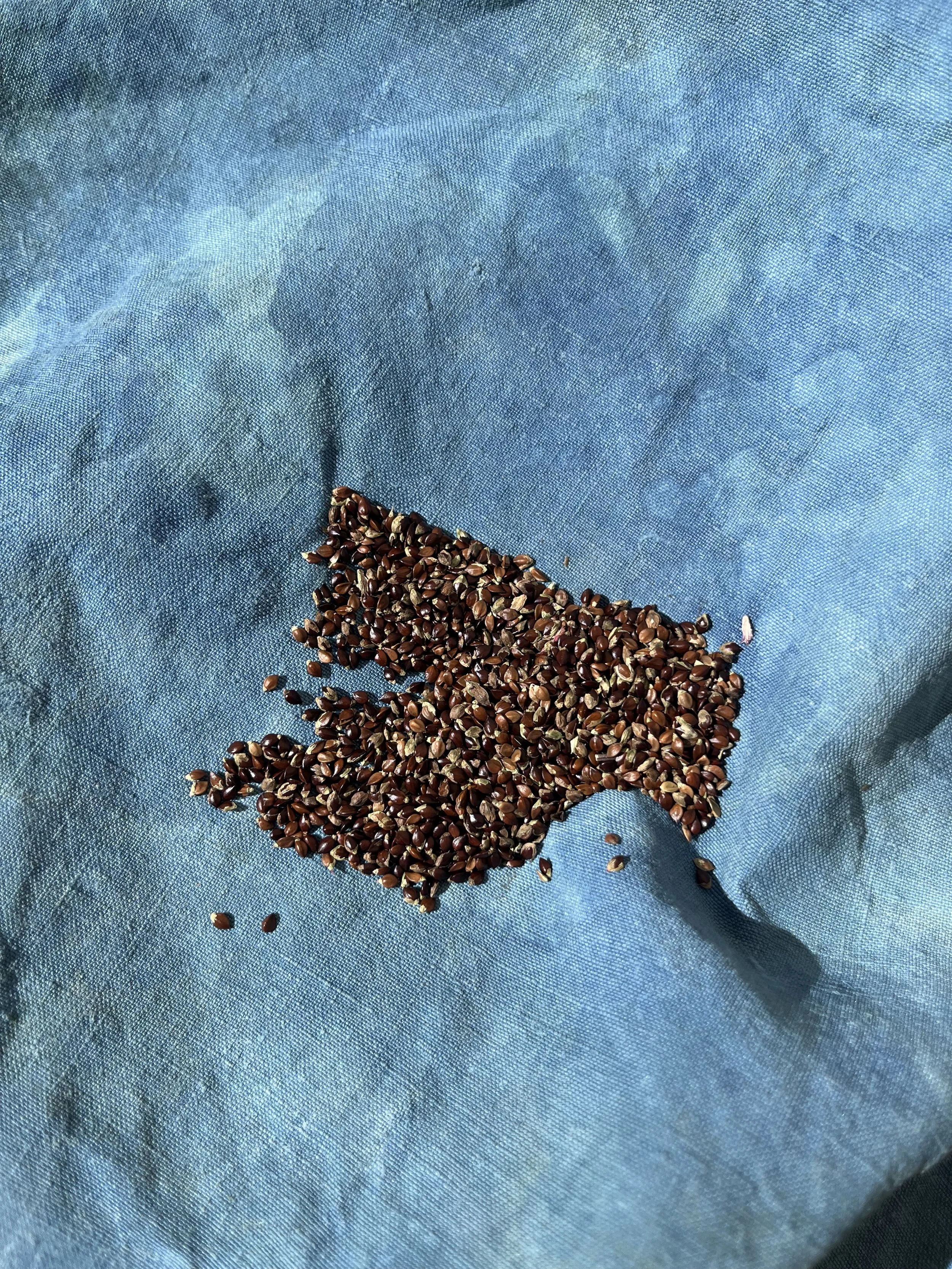
"Maruba" in Japanese language, literally means round leaf, another of the original Japanese indigo varieties, grown in Tokushima, Japan. Used primarily for the purpose of making indigo compost pigment called "Sukumo".
Sow seeds into tray, prick out and pot on to establish, or sow directly into cells in groups of three or more depending on soil.
Plant out after the last frost in your region. If exposed to wind over long periods (weeks) the leaves will redden, interaction with this particular element could trigger early flowering as would minimal in sunlight. Full to partial sun is best or a minimum of 8 hours. Have noted indigo grown in locations which offer some shade though the hotter months contain more indigo, therefore offering some shading where necessary is recommended.
On planting, we've found adding organic chicken manure or pellets, to the planting spot, assists greatly in maintaining the nitrogen levels. All varietals of Persicaria tinctoria enjoy, nitrogen based feeds preferably organic, so as it is safe for you, your family and any pets. Most of all it is kinder to the soil in which your dye plants are growing. Water the indigo well, as they are heavy drinkers.
Originally, Persicaria tinctoria grew wild on river banks in Asia. Stems sprouts new roots from nodes readily, when left in water. Plant numbers may also be increased using this method. Cut stems remove all leaves and place in water until roots have grown out from nodes, circa 10 days. The stems can then be potted up in saturated soil or compost, saturation should be maintained for at least 48 hours so that the roots can adjust to the new environment.
Plant cuttings deep into the soil so that only the new green tips are showing on the surface of the soil and nodes with roots are completely buried. Roots at this stage are supporting not only the general growth but also the over all structure of the plants too.
Two to three weeks after planting and in all cases, seedlings or cuttings, pinch out centre leaves, to encouraging bushing further.
We generally harvest plants at 50- 60cm in height.
When harvesting leave 6-8 cms of stem for regrowth. This will encourage the second harvest to grow in more densely. Feed well poste harvest too, in order to boost the return of new foliage. We find organic tomato liquid fertiliser works well.
Timely harvesting is required, Harvesting after plants are blooming will alter the indigo quantity and quality, aledgedly losing approximately 20-25% plus depending on the status of the flowers and as to whether flowers have become seed heads.
3 grams per packet
Available for orders in Europe only
"Maruba" in Japanese language, literally means round leaf, another of the original Japanese indigo varieties, grown in Tokushima, Japan. Used primarily for the purpose of making indigo compost pigment called "Sukumo".
Sow seeds into tray, prick out and pot on to establish, or sow directly into cells in groups of three or more depending on soil.
Plant out after the last frost in your region. If exposed to wind over long periods (weeks) the leaves will redden, interaction with this particular element could trigger early flowering as would minimal in sunlight. Full to partial sun is best or a minimum of 8 hours. Have noted indigo grown in locations which offer some shade though the hotter months contain more indigo, therefore offering some shading where necessary is recommended.
On planting, we've found adding organic chicken manure or pellets, to the planting spot, assists greatly in maintaining the nitrogen levels. All varietals of Persicaria tinctoria enjoy, nitrogen based feeds preferably organic, so as it is safe for you, your family and any pets. Most of all it is kinder to the soil in which your dye plants are growing. Water the indigo well, as they are heavy drinkers.
Originally, Persicaria tinctoria grew wild on river banks in Asia. Stems sprouts new roots from nodes readily, when left in water. Plant numbers may also be increased using this method. Cut stems remove all leaves and place in water until roots have grown out from nodes, circa 10 days. The stems can then be potted up in saturated soil or compost, saturation should be maintained for at least 48 hours so that the roots can adjust to the new environment.
Plant cuttings deep into the soil so that only the new green tips are showing on the surface of the soil and nodes with roots are completely buried. Roots at this stage are supporting not only the general growth but also the over all structure of the plants too.
Two to three weeks after planting and in all cases, seedlings or cuttings, pinch out centre leaves, to encouraging bushing further.
We generally harvest plants at 50- 60cm in height.
When harvesting leave 6-8 cms of stem for regrowth. This will encourage the second harvest to grow in more densely. Feed well poste harvest too, in order to boost the return of new foliage. We find organic tomato liquid fertiliser works well.
Timely harvesting is required, Harvesting after plants are blooming will alter the indigo quantity and quality, aledgedly losing approximately 20-25% plus depending on the status of the flowers and as to whether flowers have become seed heads.
3 grams per packet